World Models & Game Data: Teaching Robots to Imagine
Genie 3, Cosmos 3, Dreamer 4 — world models became the defining AI battleground of 2026, with LeCun and Fei-Fei Li both betting their next decade on them. Robots don't play games, but they learn to predict consequences. Here's why labs collect game data, and why real robot video still grounds it all.
By Tbrain Research
A world model is an AI that imagines what happens next: give it a scene and an action, and it predicts the frames that follow. With a good one, a robot can simulate "if I push this cup, it tips" before it ever moves — planning safely in its head instead of breaking dishes to find out. In 2026, world models became the most contested frontier in AI.
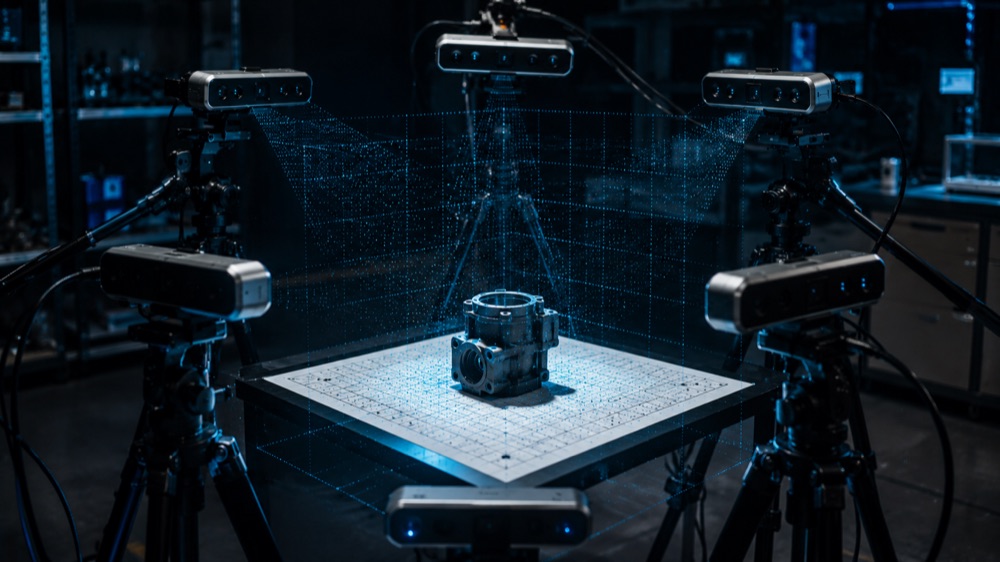
The 2026 landscape moved fast
Three releases reset expectations, and they split cleanly by philosophy:
| System | Org | What's new | Access |
|---|---|---|---|
| Genie 3 | Google DeepMind | Real-time interactive 3D worlds at 24 fps; latent-action learned from raw video | Closed API preview |
| Cosmos 3 | NVIDIA | Physics-aware synthetic video; shared latent action space across embodiments | Self-hostable, Apache-2.0, 2M+ downloads |
| Dreamer 4 | DeepMind | "Training Agents Inside Scalable World Models" — policy learned in imagination | Research |
Genie 3 learns a compressed latent action space from raw video with no labeled actions, then lets you steer the world it dreams. Cosmos 3 took the practitioner path — open weights on Hugging Face, past two million downloads. Alongside them, a wave of robotics-specific work — DreamGen, DreamDojo (44,000 hours of egocentric video), DreamZero — pushed the thesis that you can train a policy largely inside the model's imagination.
The unlock wasn't prettier video. It was closing the loop: generating frames conditioned on a specific action, in real time, so an agent can act, see the consequence, and react.
The capital followed the thesis. Yann LeCun left Meta to launch AMI Labs on a reported €500M raise to build systems that understand physics rather than predict text; Fei-Fei Li's World Labs shipped "Marble" to make world-model generation commercially available. When two of the field's most-cited researchers both bet their next decade on world models, the signal is hard to ignore.
How Cosmos 3 became the practitioner's default
Cosmos 3 won adoption for an unglamorous reason: you can actually run it. Where Genie 3 sits behind a closed API, NVIDIA shipped Cosmos with open weights under a permissive license, and it crossed two million downloads. Technically, its trick is an omnimodal design that maps many robot embodiments into a single shared latent action space while preserving each body's structure — domain-aware projection layers keep a humanoid's actions distinct from a gripper arm's even inside one model. For a robotics team that means one world model can generate physics-aware training video across a whole fleet, instead of one model per robot. But a synthetic-video generator is only as physically honest as the real footage it was grounded on. Self-hostable convenience doesn't remove the real-data requirement; it just relocates it to your capture pipeline.
So why do labs collect game data?
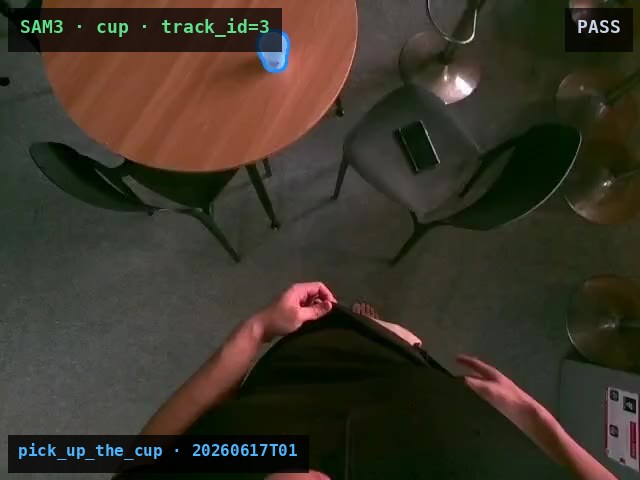
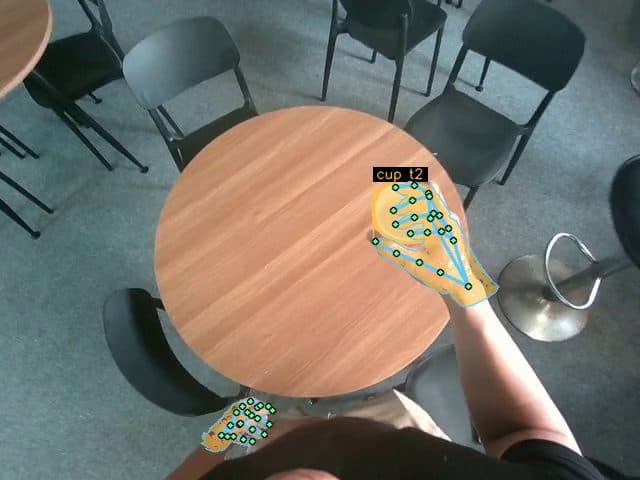
cup · track_id=3, PASS). In a game that label is free; in the real world it has to be earned.To teach "action → consequence," you need (frame, action) pairs — and in a game, every keystroke is a free, perfect, frame-synced action label. Games give you infinite, controllable, resettable environments where failing a million times costs nothing. DeepMind's earlier GameNGen reproduced DOOM inside a neural network; the Genie line generates playable worlds outright. It is the cheapest imaginable source of the exact supervision world models crave.
Why games alone will never be enough
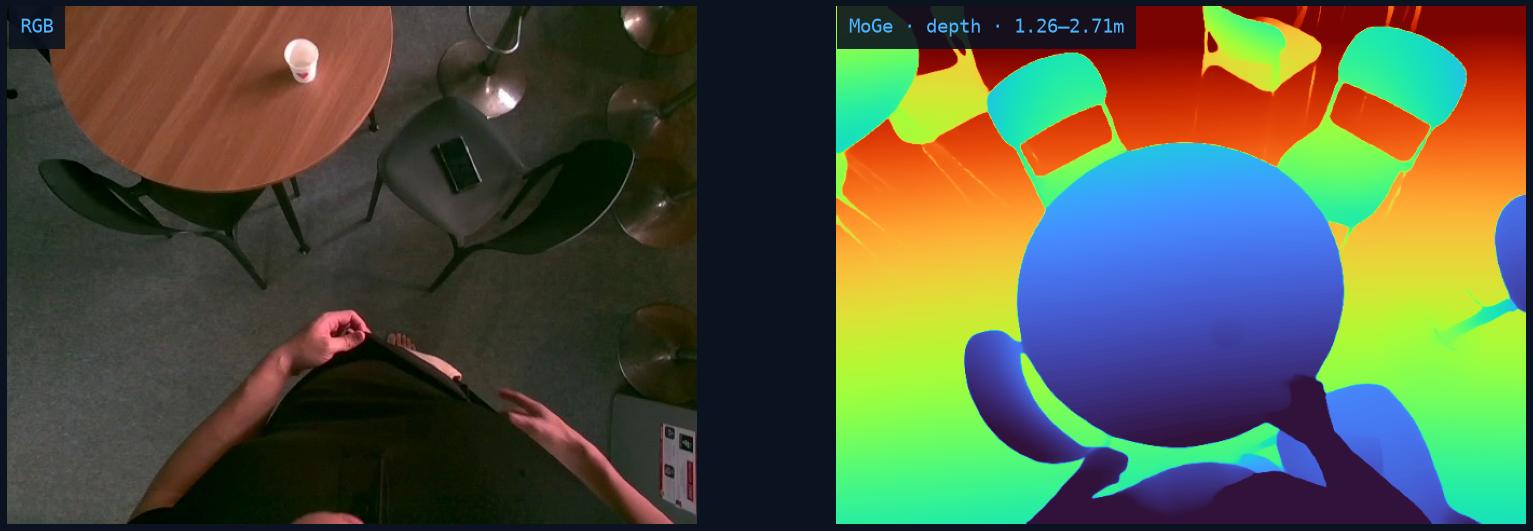
A model that only knows game physics won't survive real friction, soft fabric, variable lighting, and the thousand-and-one ways a real object refuses to behave. Simulation amplifies data; it does not replace ground truth. The recipe every serious lab converges on is the same:
- Learn dynamics cheaply and at massive scale in games and simulation.
- Ground the world model in real, action-labeled robot and egocentric video so its predictions match physical reality.
- Use the grounded model to plan, generate synthetic edge cases, and cut real-world trial-and-error.
That middle step is the expensive one — and the defensible one. Real, diverse, synchronized, QC'd demonstrations are the scarce ingredient that keeps an imagined world honest. Feed a world model desynced or metric-inconsistent grounding data and it learns the wrong physics; every downstream plan inherits the error.
Grounding is a data-quality problem in disguise
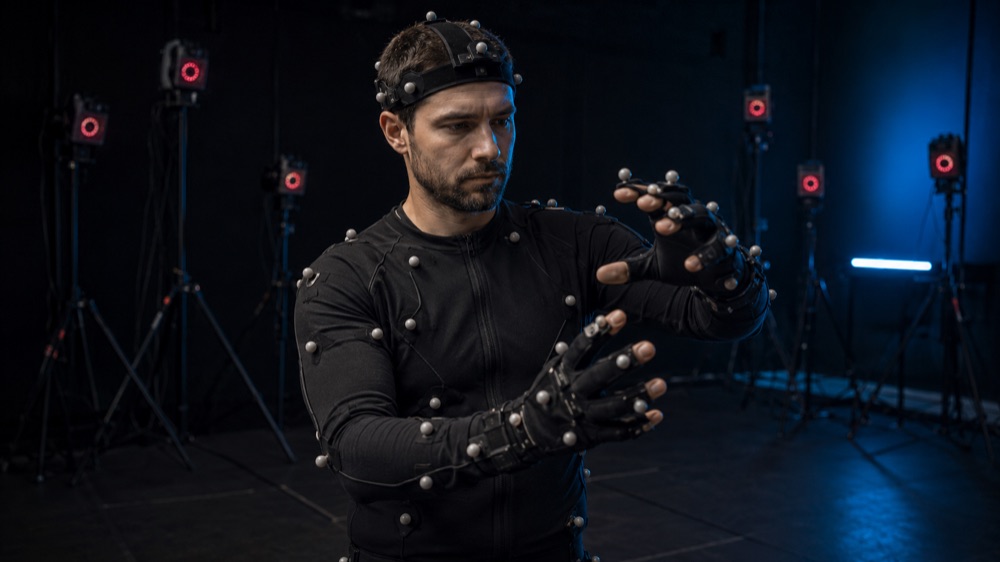
The unglamorous requirements are exactly the ones a capture pipeline has to earn: hardware-clock synchronization across every stream, metric depth with a world-scale sanity check (an object's position ‖t‖ has to land inside real workspace bounds, e.g. 0.1–5 m), and clean per-object tracks. Miss any of them and the "ground truth" quietly lies.
The compute reality check
World models aren't a free shortcut around data — they trade a data bill for a compute bill. Training on visual and spatial data demands exponentially more compute than training a text model, which is why the serious entrants are compute-rich labs and GPU vendors. The consequence buyers should internalize: because compute is the expensive part, nobody can afford to burn it grounding a model on bad real data. The garbage-in-garbage-out tax is paid in GPU-hours.
From imagination to the factory floor
The payoff, when the grounding is right, is concrete. A grounded world model lets a policy rehearse a manipulation in latent space, generate synthetic variations of a rare edge case, and check "what happens if I push here" before committing a motor command — cutting real-world trial-and-error and the broken hardware that comes with it. But every one of those imagined rollouts is only as trustworthy as the real episodes that anchored the model's physics. Ground it on production-grade capture and it plans like the real world; ground it on desynced footage and it confidently hallucinates.
What this means if you're building
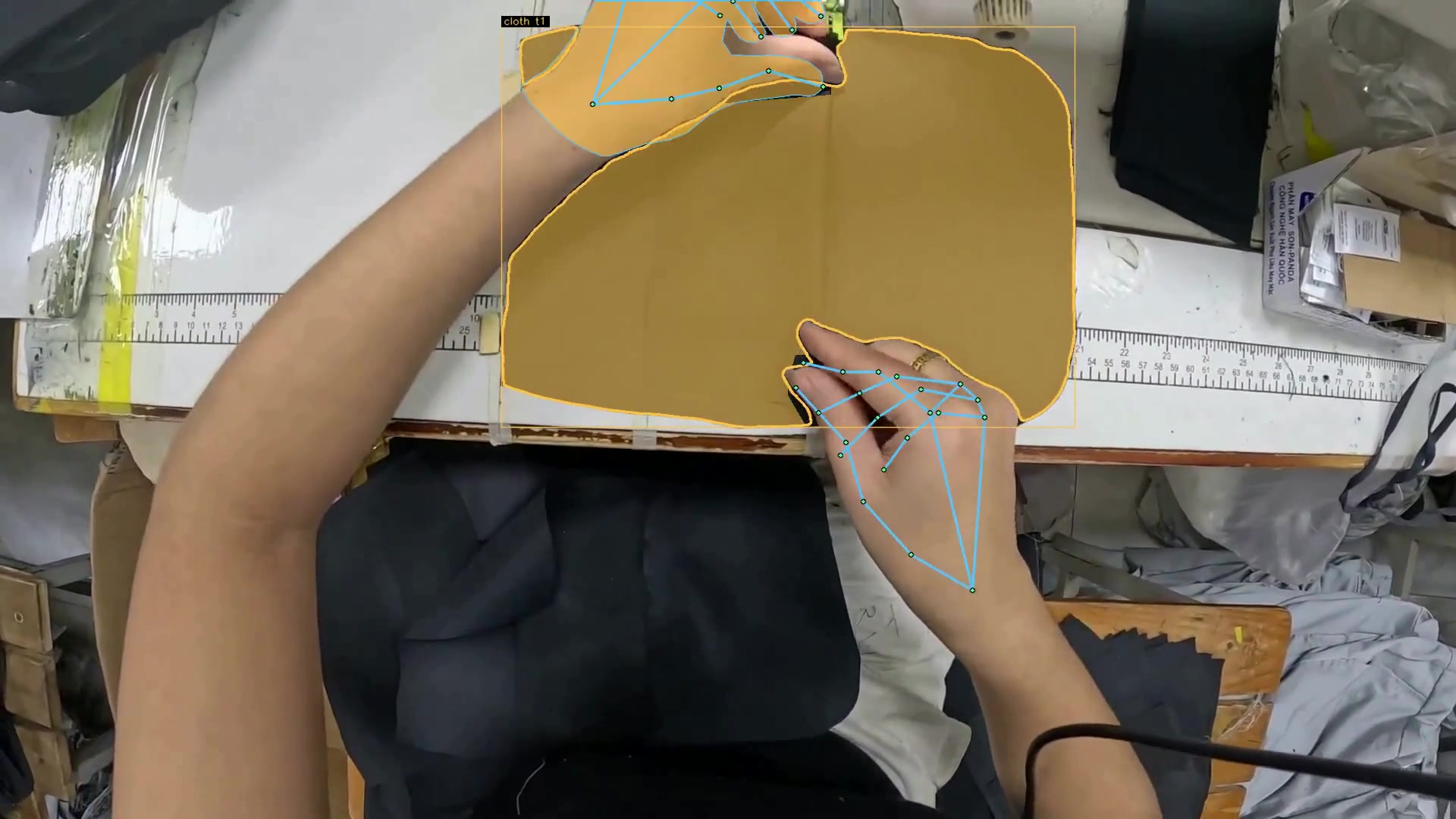
World models don't reduce your need for real data — they raise the bar on its quality. That's the foundry Tbrain runs: real, action-paired capture from production environments, hardware-clock synchronized, depth- and world-scale-checked, QC'd against 15 hard rules, and delivered in the RLDS and LeRobot formats these training stacks expect. Teach a robot to imagine all you want — just make sure the world it learned from was real. Ask us for a grounded sample.